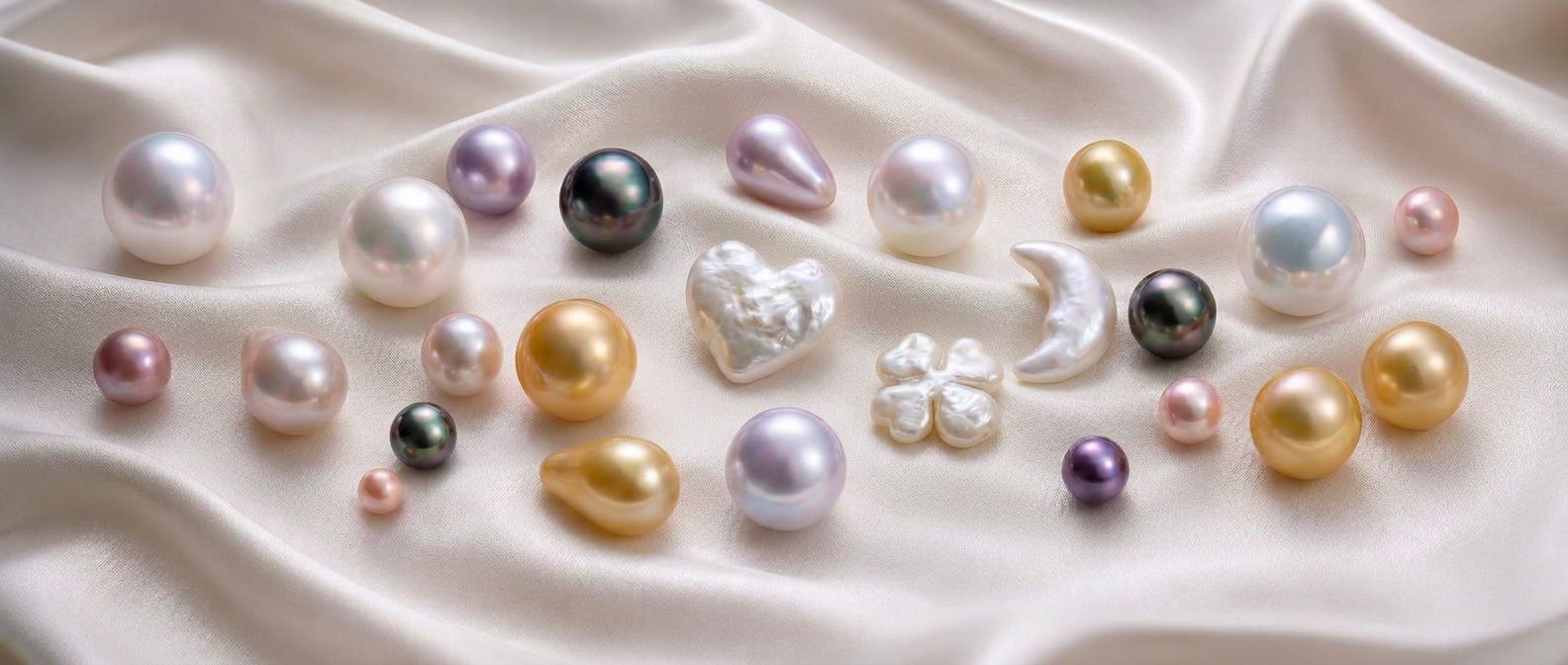
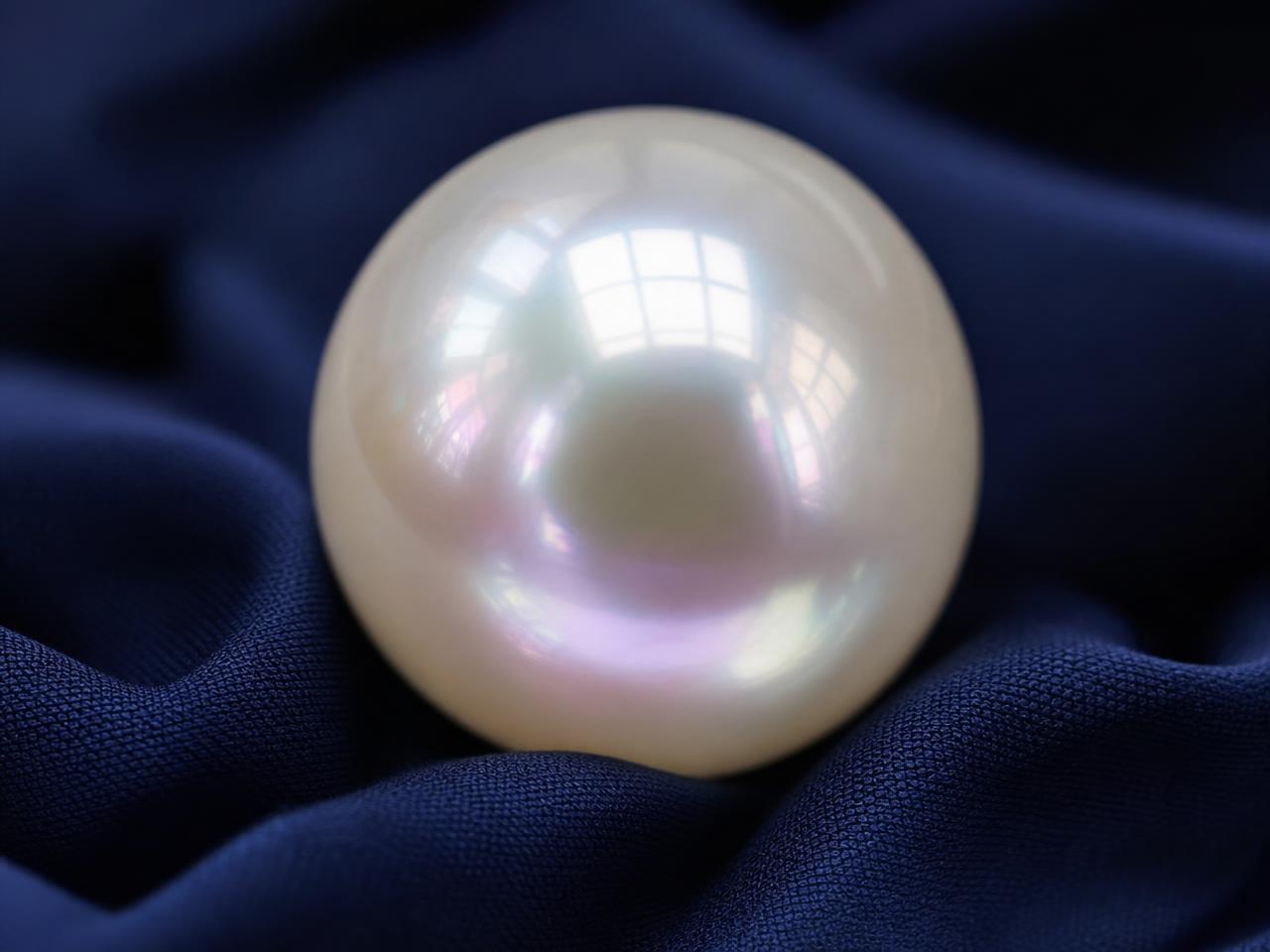
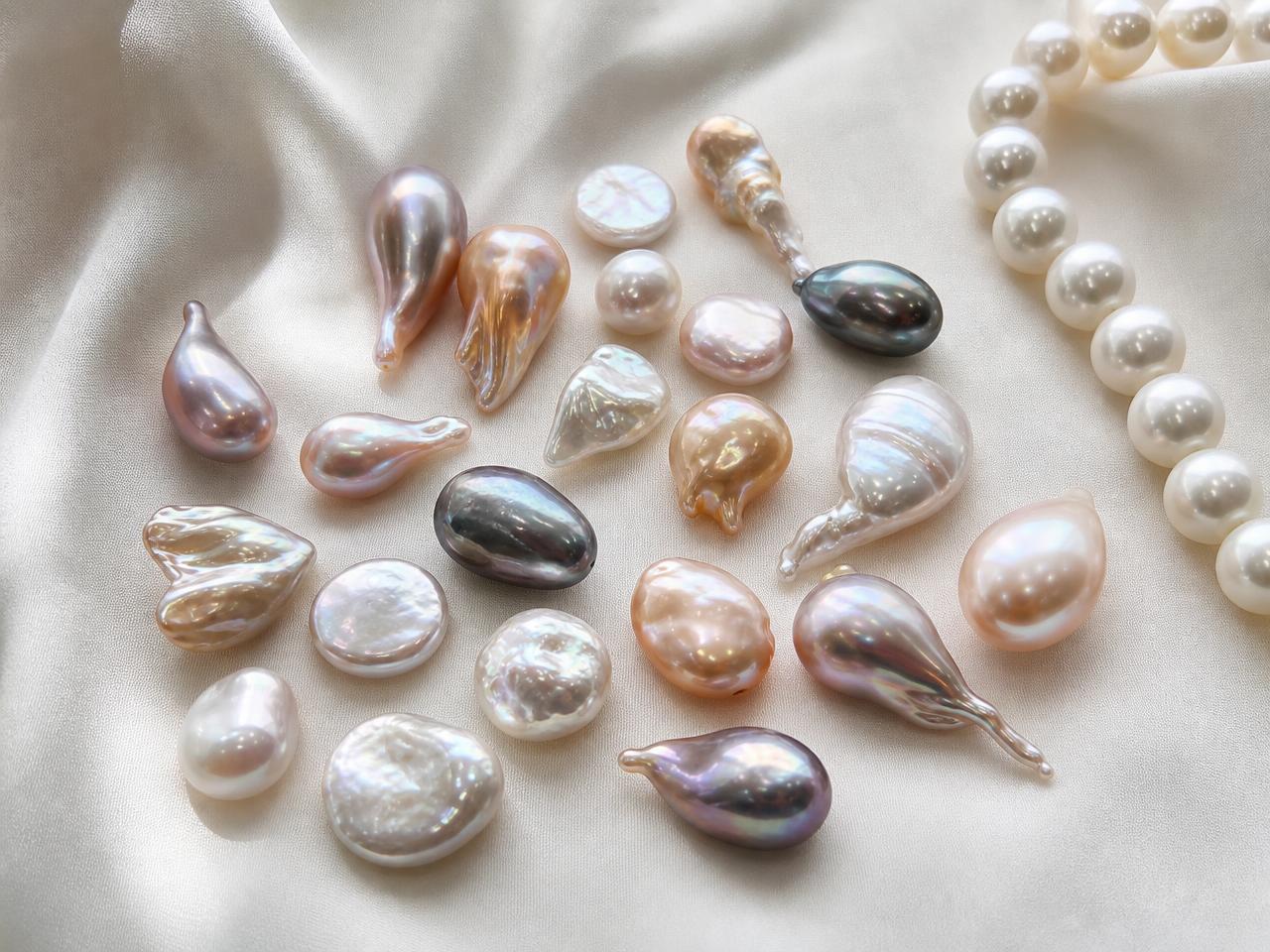
Every cultured pearl belongs to one of two families: freshwater, grown in mussels in lakes and rivers, or saltwater, grown in oysters in the sea. Neither is inherently better — they are simply different expressions of the same miracle.
Freshwater
Lakes and rivers, primarily China
The most versatile pearl in the world — and the heart of Lespéra. Modern freshwater pearls grow in remarkable luster and near-round shapes, in natural whites, pinks, and lavenders, at a price that lets you wear them every day.
Nearly the entire world's supply comes from one region in China — where we source ours.
A modern star: the Edison pearl
Edison pearls are a new generation of nucleated freshwater pearls, cultivated with a technique inspired by South Sea pearl farming — a single bead nucleus per mussel, grown slowly for years. The result is something freshwater pearls never had before: large diameters of 11mm and beyond, a deep metallic luster that rivals Akoya and Tahitian pearls, and dreamy natural colors — including a soft lilac-purple found nowhere else. They were created to close the size gap between freshwater and the great saltwater pearls — and they did.
The name comes from a famous remark attributed to Thomas Edison: that there were two things his laboratory could never make — diamonds and pearls. A pearl so fine it honored the man who couldn't invent one.
Akoya
Saltwater, Japan
The classic white pearl of tradition. Akoya pearls are famed for a sharp, mirror-like luster that few others match, typically in perfectly round shapes from 6 to 9mm.
The pearl of the single white strand — timeless for a reason.
South Sea White
Saltwater, Australia and Indonesia
The great white pearl of the southern seas — grown in silver-lipped oysters into generous sizes of 10 to 15mm and beyond. Its luster is soft and satiny rather than sharp, a glow that feels lit from within.
Often called the queen of pearls — the rarest white pearl in the world.
South Sea Golden
Saltwater, the Philippines and Indonesia
Grown in gold-lipped oysters, these pearls carry a natural golden body color — from soft champagne to deep, saturated gold. The deeper the gold, the rarer the pearl.
Warm, regal, and unmistakable — no other pearl wears this color naturally.
Tahitian
Saltwater, French Polynesia
The naturally dark pearl — grey, peacock green, aubergine, and black, straight from the oyster. Dramatic and unmistakable, usually 8 to 14mm.
Proof that a pearl doesn't have to be white to be classic.